
High-resolution electron microscopy sheds light into the cellular responses to stress
Mitochondria are cellular compartments responsible for producing most of the cell’s energy. Consequently, tissues with high energetic demands, such as muscles and the brain, are particularly sensitive to mitochondrial dysfunction. For example, there are specialized nerve cells located primarily in the midbrain that produce and release the neurotransmitter dopamine, the so-called dopaminergic neurons. Dopamine controls motivation, movement, mood, and drive, therefore they require particularly high amounts of energy. These dopaminergic neurons selectively degenerate in Parkinson’s disease, but the underlying mechanisms are not understood. Therefore, no cure exists for this disease, affecting more than 10 million patients worldwide according to the umbrella organization Parkinson´s Europe.
One possibility is that the high energy demands of dopaminergic neurons place their mitochondria under extraordinary stress, which may eventually cause these organelles to malfunction. Conversely, in certain forms of cancer, exacerbated mitochondrial fitness may enhance the proliferative capacity of cancer cells. Therefore, it is crucial to understand the molecular mechanisms that maintain the fine balance of mitochondrial health and stress resistance. However, technological limitations had so far impeded scientists to study these processes at sufficient resolution within cells.
An international team of researchers led by Prof. Dr. Rubén Fernández-Busnadiego, leader of the working group “Structural Cell Biology” at the Department of Neuropathology at the University Medical Center Göttingen (UMG) and member of the Göttingen Cluster of Excellence “Multiscale Bioimaging: From Molecular Machines to Networks of Excitable Cells” (MBExC), have addressed these challenges. The researchers used an innovative electron microscopy technology known as cryo-electron tomography that enables imaging of three dimensional (3D) cells frozen by an ultrafast procedure. The advantage: This method preserves the cells in a close-to-native state and shows with near-atomic precision how mitochondria downregulate protein translation and increase protein folding – a crucial process ensuring protein functionality – under stressful conditions in human cells. In particular, they identified the mitochondrial heat shock protein 60 (mHsp60), an important ‘folding helper’, as a key protein that contributes significantly to mitochondrial functionality under stress conditions. The researchers were able to show in high resolution how mHsp60 works in general, and how it adapts to stress by remodeling its structure and thereby increasing its activity.
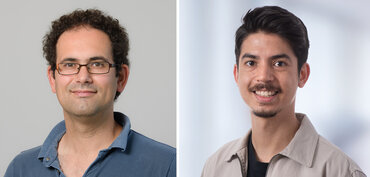
“We carried out a stress test within the cell’s energy factories, to analyze the molecular mechanisms of quality control and their weaknesses,” says Prof. Fernández-Busnadiego, last author of the study. “We are particularly interested in deciphering the link between cellular stress, protein misfolding and severe neurodegenerative diseases.”
Kenneth Ehses, postdoctoral researcher at the Department of Neuropathology at UMG, first author of the study and member of the Hertha-Sponer-College, the MBExC's teaching and training platform, added: “Cryo-electron tomography technology allows us to study protein complexes directly within their native cellular environment, enabling us to investigate possible mechanisms for the development of diseases. The findings could contribute to the development of new treatment strategies for neurodegenerative diseases such as Parkinson´s Disease.”
The results were recently published in the journal Science Advances.
Original publication:
Kenneth Ehses, Jorge P. López-Alonso, Odetta Antico, Yannik Lang, Till Rudack, Abdussalam Azem, Miratul M.K. Muqit, Iban Ubarretxena-Belandia and Rubén Fernández-Busnadiego. Structural remodeling of the mitochondrial protein biogenesis machinery under proteostatic stress. Science Advances (2026). DOI: 10.1126/sciadv.aed3579
The study in detail
The team subjected human cells to mitochondrial stress, and subsequently flash-frozen them in a close-to-native state at approximately -200 degrees for cryo-electron tomography imaging. The stress was induced by a chemical substance which causes misfolded and therefore inactive proteins to accumulate in the mitochondria. This triggers an increased formation of mHsp60 complexes, which support other proteins to fold correctly by encapsulating them within a protective barrel-like structure. Cryo-electron tomography data revealed how these barrels are assembled in human cells, and that the three-dimensional structure of mHsp60 is altered in such a way that it can continue to fold mitochondrial proteins correctly and to an increased extent, even under difficult stress conditions. Thus, cryo-electron tomography imaging provided a sufficient resolution to determine structures of key molecular machines for mitochondrial protein biogenesis, and to analyze their alterations upon stress directly within the cells.
The functional and structural cycle of mHsp60 was analyzed in this study in close collaboration with researchers from the Biofisika Institute in Spain, the Tel Aviv University in Israel and the University of Dundee in UK resulted. In the next steps, the team will investigate how this cycle is altered under pathological conditions, including Parkinson’s Disease.
The study was funded amongst others by the German Research Foundation (DFG) through the MBExC Cluster of Excellence, as well as the Aligning Science Across Parkinson's (ASAP) initiative, a global consortium accelerating the discovery of a cure to Parkinson’s through highly collaborative research and open science.
The Göttingen Cluster of Excellence MBExC
The Göttingen Cluster of Excellence “Multiscale Bioimaging: From Molecular Machines to Networks of Excitable Cells” (MBExC) has been funded since January 2019 as part of the Excellence Strategy of the German federal and state governments. With a unique research approach, MBExC investigates the disease-relevant functional units of electrically active heart and nerve cells, from the molecular to the organ level, using innovative imaging techniques such as optical nanoscopy, X-ray imaging and electron tomography. To this end, MBExC brings together numerous university and non-university Göttingen Campus partners. The overarching goal: to understand the connection between heart and brain diseases, to carry out basic and clinical research and to develop new methods.
Scientific expert:
Prof. Dr. Rubén Fernández-Busnadiego, Department of Neuropathology, +49 551 / 39-60745, ruben.fernandezbusnadiego(at)med.uni-goettingen.de
Press contact:
University Medical Center Göttingen, University of Göttingen
Head of Corporate Communications
Lena Bösch
Von-Siebold-Str. 3, 37075 Göttingen
Phone +49 551 / 39-61020
Fax +49 551 / 39-61023
presse.medizin(at)med.uni-goettingen.de
www.umg.eu